| « | December 2008 | » | ||||
|---|---|---|---|---|---|---|
| Sun | Mon | Tue | Wed | Thu | Fri | Sat |
| 1 | 2 | 3 | 4 | 5 | 6 | |
| 7 | 8 | 9 | 10 | 11 | 12 | 13 |
| 14 | 15 | 16 | 17 | 18 | 19 | 20 |
| 21 | 22 | 23 | 24 | 25 | 26 | 27 |
| 28 | 29 | 30 | 31 | |||
ILWU-IBU Oil Spill Response Workers on Strike Over Unfair Labor Practices
http://blog.aflcio.org/2008/08/21/oil-spill-response-workers-on-strike-for-first-contract/
Oil Spill Response Workers on Strike Over Unfair Labor Practices
by Mike Hall, Aug 21, 2008
Oil spill response workers, members of the Inlandboatmen's Union
(IBU), are on the picket line this week in Tacoma, Wash., striking
over what they say is illegal discrimination and intimidation by their
employer, the Marine Spill Response Corp. (MSRC).
In 2006, the workers voted to join the IBU, an affiliate of the
International Longshore and Warehouse Union (ILWU). But the company
has dragged its feet in negotiations and failed to reach a fair
contract with the boatmen. The workers also say they have been
threatened with violence.
The oil spill workers are among the many employees across the country
who face employer harassment, threats and intimidation even after they
form unions. The proposed Employee Free Choice Act would allow for
mediation and arbitration for such first-contract disputes because
one-third of the time, private-sector employers do not negotiate a
first contract.
In June, the National Labor Relations Board (NLRB) office in Seattle
KELLY KEARSLEY - The News Tribune, May 1, 2008
More than 25,000 West Coast International Longshore and Warehouse workers, including many hundred in Tacoma, are taking a day off work today in protest of the war in Iraq.
May Day is traditionally a day to celebrate labor and workers’ rights.
Scott Mason, spokesman for Tacoma’s ILWU Local 23, said this morning that usually 200 to 300 dockworkers would be coming to work today. But instead four ships are waiting to be unloaded in the Port of Tacoma and the truck gates are quiet.
ILWU International President Bob McEllrath said the workers are “standing down on the job and standing up for America.”
“We’re supporting the troops and telling politicians in Washington that it’s time to end the war in Iraq,” McEllrath said.
The protest doesn’t come as a surprise to longshore employers.
The union voted in February to stop work today in opposition of the war and made a request to the Pacific Maritime Association, the organization that represents terminal operators, stevedores and cargo carriers. The union’s contract allows for stop work meetings, with advance notice, though they usually occur during evening shifts. The PMA denied the request for a work stoppage during the day, typically the busiest hours for West Coast ports.
Disclaimer - The opinions of the author do not necessarily match those of the TWSC. This article is reposted in accordance to Fair Use guidelines.
By Matt Smith - San Francisco Weekly, February 6, 2008
Imploding U.S. mortgage markets leave behind trillions of dollars in economic damage. The dollar's slide against the euro and the yuan raises fears of a currency collapse. January job losses portend recession.
To these threats to U.S. economic stability, add a new and severe one that is brewing in the conference rooms of the Cathedral Hill Hotel, a blue-collar establishment on Van Ness. There, West Coast dockworkers' representatives are devising a strategy to renegotiate a unified ports agreement with shipping companies that is scheduled to expire July 1. If the renegotiation is as fractious as it was in 2002 — when shippers attempted to break the union by shutting down 29 West Coast ports for 10 days — an extended dispute could paralyze U.S. economic activity and send financial markets tumbling.
A shutdown like the last one "carries the very real risk of triggering a sudden crisis in international financial markets," U.C. Berkeley professor Stephen Cohen, co-director of the Berkeley Roundtable on the International Economy, wrote in a 2002 paper. When I spoke with him last week, he said he'd be watching the situation this time, too: "I don't think the significance is any different. At some point, you start running out of parts, and the factory stops, and the factory that relies on that factory for components stops, and you have a chain reaction that's really rather a nightmare."
MAERSK STRIKE! -- PORT OF TACOMA - By Acumensch, from YouTube - November 8, 2007
http://www.youtube. com/watch? v=DRKOYrE8XUo
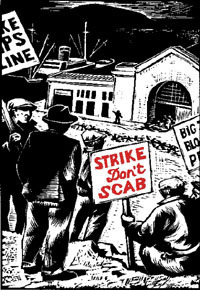
An unannounced wildcat strike was called to push the administration of Maersk (headquarters in Tacoma) to allow union workers to join the union of their choice instead of the union the company requires them to be members of,Securitas, which doesn't provide or bargain for workers' basic needs.
MAERSK UNION STRIKE IN TACOMA - By Tacoma SDS, Indymedia- November 8, 2007
http://seattle. indymedia. org/en/2007/ 11/262632. shtml
An unannounced wildcat strike was called to push the administration of Maersk (headquarters in Tacoma) to allow union workers to join the union of their choice instead of the union the company requires them to be members of, Securitas, which doesn't provide or bargain for workers' basic needs.
The strike at the Port of Tacoma yesterday was unannounced publicly, to catch the company off-guard and to require an arbitrator from the longshoremens' union (ILWU) to come to the port and declare the picket line the Maersk workers staged was unsafe to cross. Jobs With Justice organized the strike. Tacoma SDS and other community members who heard about it went to the port to show solidarity.
Maersk is the largest shipping company in the world, Adam Hoyt said. Its North American headquarters are located in Tacoma. The workers are not granted basic needs that other union workers are, such as a pension plan. Workers are forced to join the Securitas union which is acts as a pacifier to the union workers. Maersk has tried its hardest to convince workers Securitas is a good union, and that other unions are dangerous.
Tacoma P.D. singled out Tacoma SDS members and asked for identification and phone numbers. There were no physical confrontations, but our group felt it was unfair and absurd that officers would single out SDS without any reasonable suspicion. They asked us if we were attending the Smash Tacoma ICE protest, trying to glean information about it. We told them we would not consent to any of their questions or searches. Officer Darlington said the port has been the site of conspiracies to conduct
terrorism. "People ride jetskis next to tankers and then they speed off in the other direction," he said. Tacoma SDS was not convinced.
(Editor's note: some of the members of SDS are also members of the IWW).
March 10, 2007
Following an afternoon rally at the Federal Courthouse in Tacoma on Friday, members of Port Militarization Resistance staged a peaceful demonstration at the Port of Tacoma, where they were met by Tacoma Police. Later, police turned violent and launched tear gas and rubber bullets at activists as they sat chanting peace slogans.
Activists opposed to a military shipment bound for Iraq continued their week long campaign with a rally in downtown Tacoma and a demonstration at the Port of Tacoma. They are protesting the deployment of a Ft. Lewis-based Stryker brigade deploying to Iraq as part of the US escalation of the conflict.
At an afternoon rally at the Federal Courthouse, anti-war activists from throughout Western Washington and Oregon held signs and listened to speakers denounce the US mission in Iraq and call for active resistance to the escalation.
Among those at the Port of Tacoma Friday night was TJ Johnson, an Olympia City councilman who is a part of Olympia Port Militarization Resistance. Johnson, the winner of the 2006 Dr. Paul Beeson award from Washington Physicians for Social Responsibility and a well-known anti-nuclear activist, told the crowd gWe have a moral obligation and a growing sense of urgency to make it clear that we want to keep soldiers safe at home, and spend our tax dollars to meet humanitarian needs, here and in the Middle East.